
Closing the Skills Gap: Prioritizing Trades is Essential for Future-Proofing the Workforce

In today’s rapidly evolving economy, the demand for skilled workers in the commercial trades has never been more pronounced. From construction and plumbing to electrical work and HVAC systems, these industries form the backbone of infrastructure development and maintenance across the United States. In 2023, the construction industry alone contributed approximately 4.4% to the U.S. GDP, amounting to nearly $1.2 trillion. This massive economic role underscores the importance of a skilled trade workforce capable of …
Non-Traditional Pathways in Education and Their Role in Closing the Workforce Gap
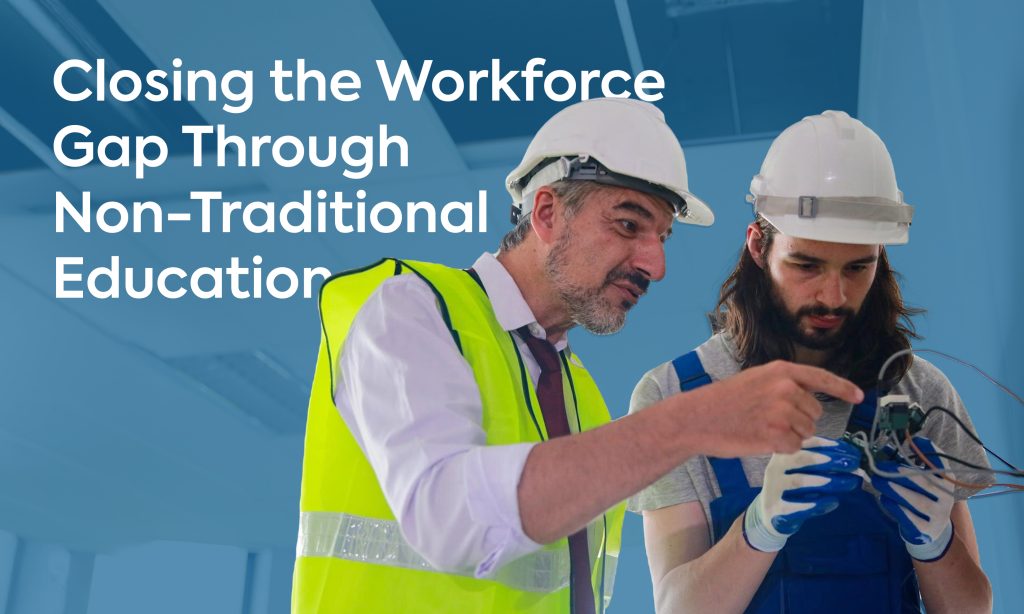
Today’s evolving job market demands flexible, skills-based education that transcends traditional degrees. Nontraditional pathways like apprenticeships, vocational training, and online certifications not only equip individuals with job-ready skills but also expand access and encourage workforce inclusivity. A nontraditional education pathway breaks from conventional degree programs and emphasizing flexibility, skill application, and accessibility. These pathways, such as apprenticeships, boot camps, and online certifications, ..